6 Best Auto Assignment and Reminder Software for Small Businesses
You are tired of chasing your team for updates on WhatsApp. Tasks get assigned verbally, then vanish into a scroll of messages, and half of them never get done on time. That is usually the moment people start hunting for software that assigns and reminds automatically.
This article breaks down six tools built for small teams, starting with what to look for in features and pricing. You will see how Tasks.Bot runs task management inside WhatsApp, then compare it with five alternatives. By the end, you will know which option fits your workflow and which one to skip.
What to Look For in Auto Assignment and Reminder Software
Choosing the right auto assignment and reminder software can make or break your team's productivity, so it's crucial to evaluate options based on your specific needs. Small businesses rarely have the luxury of a dedicated operations team, which means every manual task handoff and forgotten follow-up costs real time and money.
The right tool takes over the repetitive work of deciding who gets what and when it is due. The wrong one adds another dashboard nobody opens.
Before comparing specific products, it helps to understand the criteria that matter most for teams of five to fifty people. The two sections below cover the features that drive day-to-day value and the pricing and onboarding factors that determine whether a tool actually gets used. Keep both in mind as you work through the options in this roundup.
Key Features Small Teams Actually Need
Small teams need features that streamline task assignment, automate reminders, and provide visibility without overwhelming complexity. The goal is less time spent coordinating and more time spent doing the work.
Auto assignment sits at the center of any useful tool. Round-robin assignment spreads new work evenly across available staff, while skill-based routing sends specialized jobs to the people qualified to handle them. Geographic assignment matters for field service management, where the nearest technician should get the dispatch. Availability status and shift management keep assignments realistic rather than piling work onto someone who is off the clock.
Reminder automation is the second pillar. Deadline tracking flags tasks approaching their due date, and recurring reminders handle the repeating obligations that small teams often forget, such as weekly check-ins or monthly invoicing. A strong notification system reaches people where they already are:
- Email alerts for detailed context and record keeping
- SMS notifications for urgent or time-sensitive items
- Push notifications through a mobile app for instant awareness
Collaboration features round out the picture. Comments, file sharing, and basic task prioritization keep conversations attached to the work instead of scattered across chat threads. Workload balancing gives managers a clear view of who is overloaded before burnout sets in. Mobile accessibility matters too, since many small business tasks get handled away from a desk.
Finally, look for integration capabilities. Calendar sync keeps deadlines visible in the tools people already use, and CRM integration connects customer-facing tasks to the right account record. These connections reduce duplicate data entry and keep your project management and customer relationship management systems aligned.
Pricing and Ease of Adoption
Budget constraints and learning curves are top concerns for small teams, so pricing models and user-friendly onboarding are critical factors. A tool that saves time but takes weeks to configure is not really saving anything.
Pricing generally falls into three patterns. Per-user pricing scales with headcount and suits teams whose size fluctuates. Flat fees work well for stable teams that want predictable costs. Tiered plans bundle features by level, which can be cost-effective if you only need the basics.
Free trials and freemium options let you test a tool before committing. Use them to check the setup process, not just the feature list. A few practical questions can reveal how smooth adoption will be:
- Can a new user create and assign a task within the first few minutes?
- Does the interface require training sessions or a manual?
- Are user roles and permissions simple to configure?
- Can you import existing tasks or contacts without technical help?
Transparent pricing matters as much as the number itself. Watch for hidden costs such as charges for additional integrations, higher support tiers, or per-message fees on SMS notifications. Integration costs can quietly inflate the total cost of ownership, especially if connecting your calendar or CRM requires a paid add-on.
Scalability deserves a close look as well. A plan that fits five people today should not force a painful migration when you reach fifteen. Compare the full picture, including setup effort and long-term flexibility, rather than the monthly figure alone. The cheapest option is rarely the best value if it stalls your team's workflow automation six months in.
1. Tasks.Bot - Best Overall
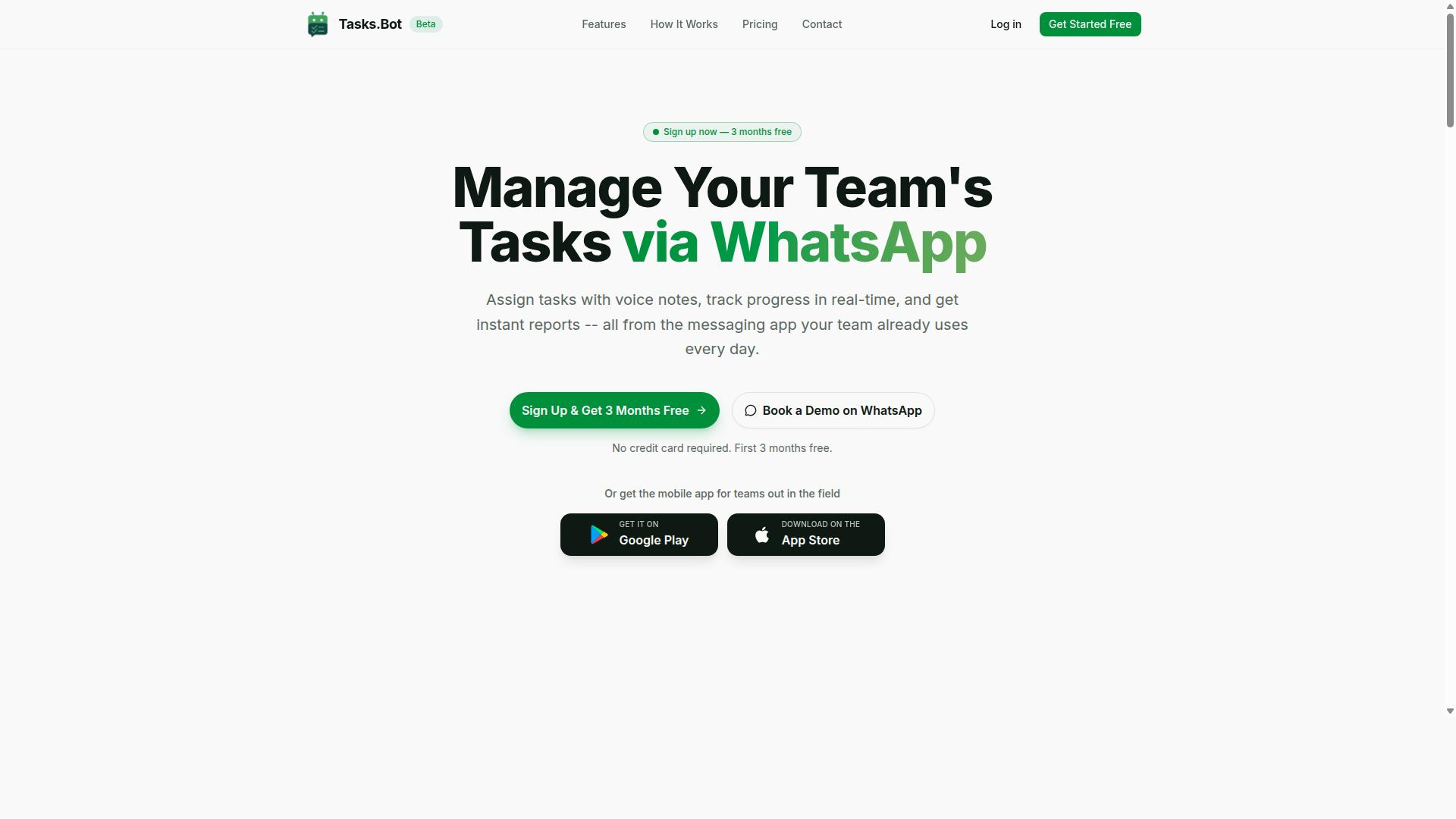
Tasks.Bot stands out as the best overall auto assignment and reminder software for teams that rely on WhatsApp for communication. Instead of asking employees to learn another dashboard, it turns the messaging app they already open every day into a task management hub.
For small businesses, that means faster adoption and less training. Tasks are created, assigned, tracked, and reported on inside WhatsApp, with a mobile app available for field teams who need push notifications, voice capture, and a home screen widget.
The platform covers the essentials of task distribution and workflow automation in one place: automatic task assignment, smart deadline reminders, approvals and automations, instant reports, tasks on a map, a live day tracker, face-verified attendance, and shifts, leave, and hours management. It is currently in beta and offers a free trial period.
The sections below break down how it works day to day and what the Full Access plan costs.
Task Management Inside WhatsApp
Tasks.Bot transforms WhatsApp into a powerful task management hub, eliminating the need for your team to adopt new software. Managers assign work the same way they send a message, and the platform uses AI to understand user intent and create tasks from those messages.
Creation is flexible. Someone can send a voice note describing a job, and Tasks.Bot turns it into a structured task. From there, automatic task assignment routes the work to the right person, and smart deadline reminders keep it moving without manual follow-up.
Day-to-day oversight happens in the same thread:
- Approvals and automations for work that needs sign-off
- Instant reports so owners see status without chasing updates
- Tasks on a map for location-based jobs
- A live day tracker for visibility into what is in progress
- Face-verified attendance for accountability
- Shifts, leave, and hours management in one place
This setup suits teams with field staff who already use WhatsApp. A service crew, delivery team, or sales force can receive jobs, confirm completion, and log attendance without switching apps. The companion Android and iOS apps add push notifications, voice capture, and a home screen widget for staff who are rarely at a desk.
Because the notification system lives inside a chat people already check, deadline tracking and recurring reminders are far less likely to be ignored than an email alert or a dashboard badge nobody opens.
Pricing and Free Trial
Tasks.Bot offers a straightforward 'Full Access' plan with all features included, priced affordably for teams of all sizes. There are no feature tiers to compare, so small businesses know exactly what they get from day one.
Pricing is available in Indian Rupees and US Dollars, and the site includes a currency selector for Indian Rupee and US Dollar. The rates are simple:
| Plan | Price | Notes |
|---|---|---|
| Monthly | ₹200 per member per month | Full Access, all features |
| Annual | ₹1,200 per year per member | Save 50%, save ₹1,200/yr per member |
The annual plan works out to roughly ₹100 per month per member, which is half the monthly rate. New users also get 3 months free, with no credit card required and the ability to cancel anytime. The service is currently in beta and offers a free trial period.
Adoption is the other selling point. There are no new accounts for your team to create and no separate app to install before work can start, because everything runs within WhatsApp. For a small business weighing task distribution and employee scheduling tools, that removes most of the setup friction that stalls rollouts. A 'Book a Demo on WhatsApp' option lets owners see the workflow before committing.
2. Reminderly.ai
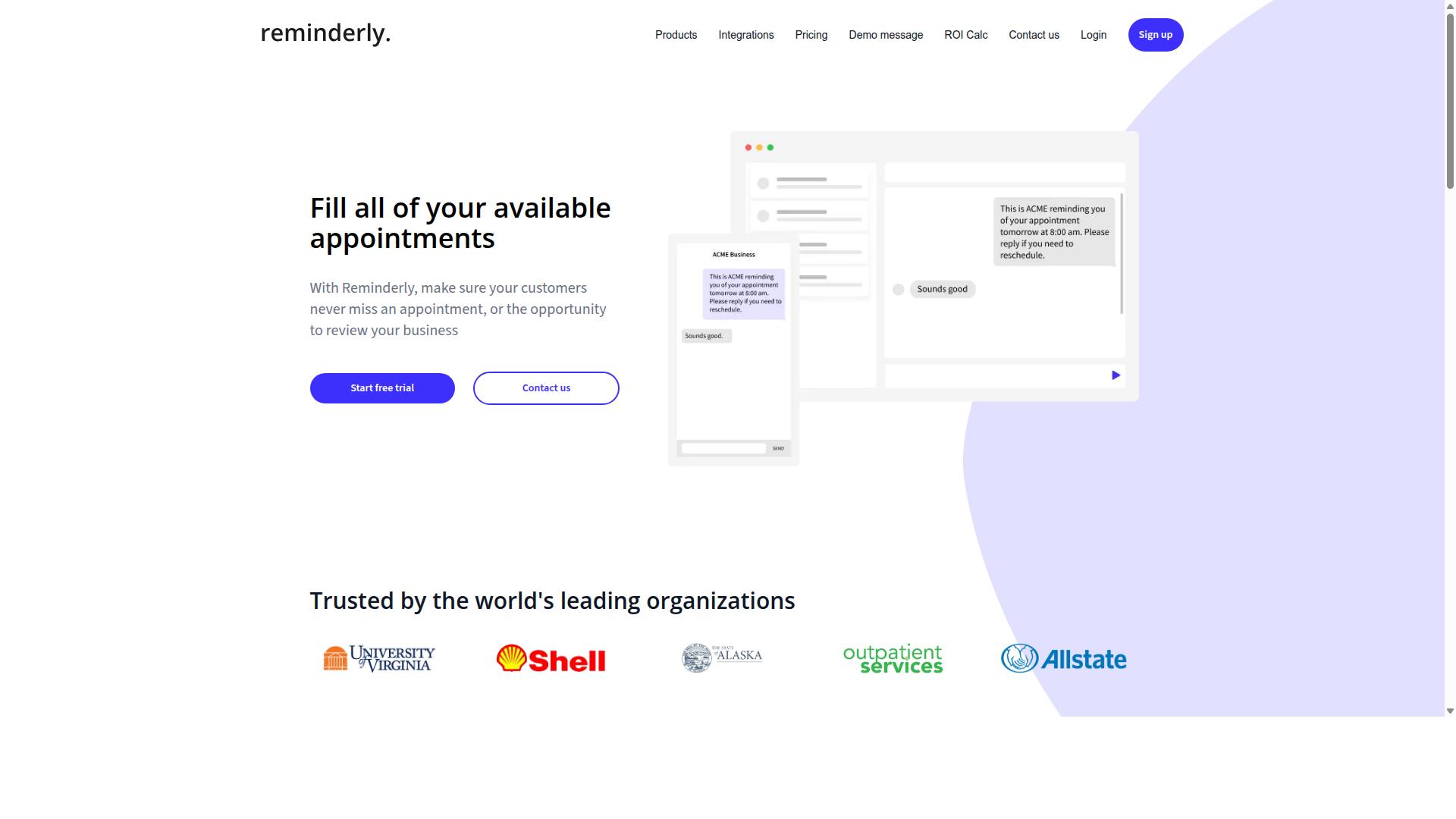
Reminderly.ai is a dedicated reminder and auto assignment tool that leverages AI to streamline task distribution and notifications. It targets small to mid-sized teams that need consistent follow-through without adding administrative overhead.
The platform's core appeal is its AI-driven scheduling. Rather than requiring managers to manually route each task, the system can interpret task details and assign them based on available context. This reduces the back-and-forth that often slows down task distribution in growing teams.
Reminder automation is the other central pillar. Users can set up recurring reminders tied to deadlines, and the tool handles delivery across common channels, which supports deadline tracking without constant manual check-ins.
- Auto assignment: AI-assisted routing of tasks to appropriate team members
- Reminder automation: Scheduled notifications for recurring and one-off deadlines
- AI scheduling: Context-aware timing suggestions for task delivery
Typical use cases include team collaboration on recurring projects, employee scheduling support, and lightweight workflow automation for teams that do not need a full project management suite. Small businesses often adopt it when manual reminder habits start to break down.
On the plus side, the AI focus and simple setup make it approachable for teams without dedicated operations staff. As with any AI-assisted tool, results depend on how well tasks are described, and some teams may find customization options limited compared to broader platforms. Evaluations should be based on publicly available information and a hands-on trial.
3. TaskRio
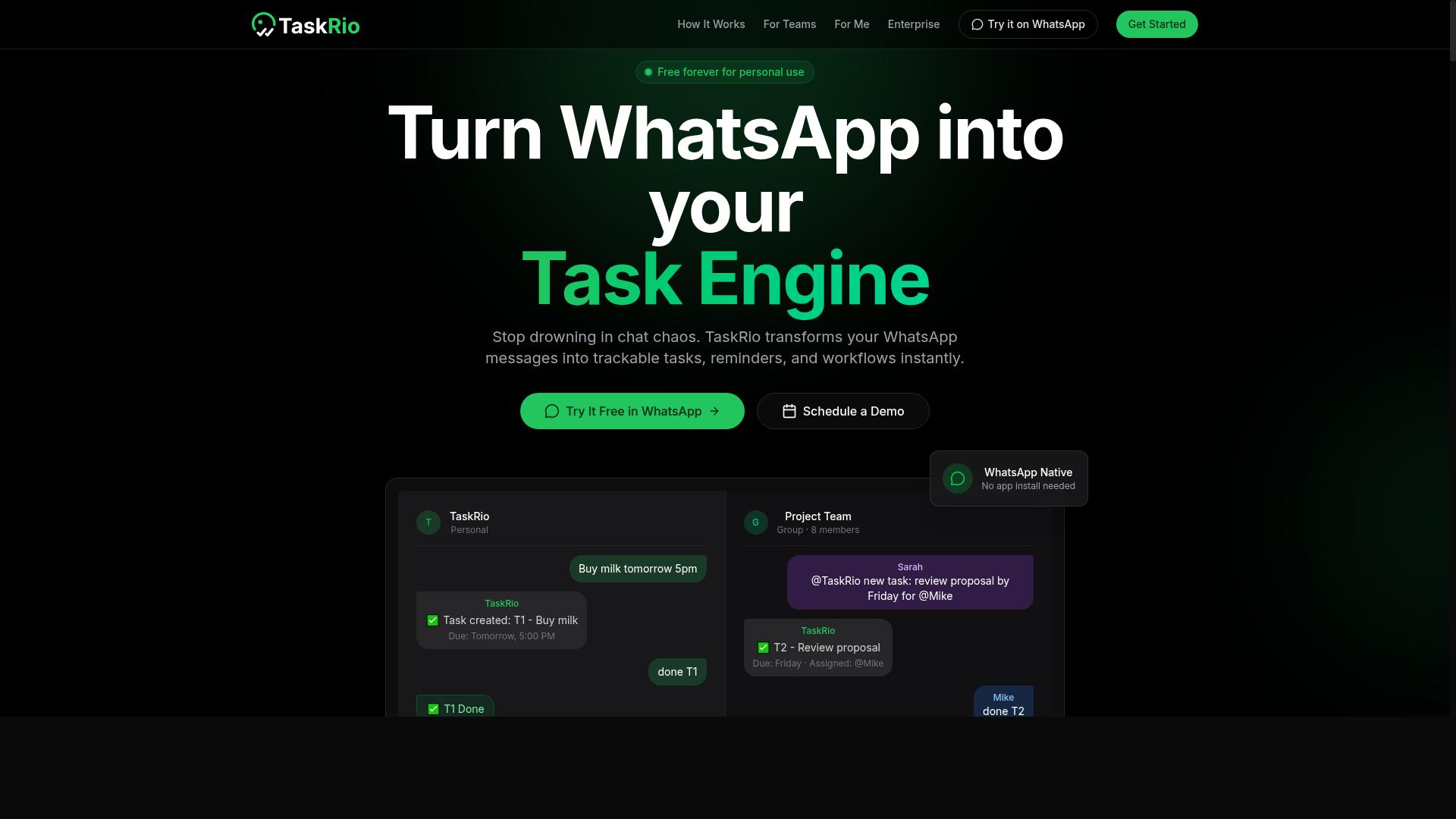
TaskRio is a task management platform that emphasizes workflow automation and team collaboration for small businesses. It is built around the idea that routine work should move on its own, so managers spend less time chasing updates and more time on delivery. Teams that juggle several concurrent projects often find this approach appealing.
The platform centers on task assignment and progress tracking. Work can be routed to the right person as soon as it is created, and status changes are visible without manual check-ins. Reminders and notifications help keep deadlines from slipping through the cracks.
TaskRio also connects with widely used business tools. Typical integrations in this category include calendar sync, email alerts, and CRM or project management platforms, which helps teams avoid duplicating data across systems.
Its target market leans toward small teams and project-based work, where roles shift and priorities change quickly. Notable differentiators include visual dashboards for at-a-glance status and customizable workflows that can be shaped around how a team already operates, rather than forcing a rigid structure.
For buyers comparing auto assignment software, TaskRio is worth a look when flexible workflows and clear visibility matter more than deep enterprise controls. As with any tool, confirm current capabilities and terms directly with the vendor.
4. Karo.bot
Karo.bot is a chatbot-based task management tool that automates assignments and reminders within messaging platforms. Instead of asking users to log into a separate dashboard, it brings task distribution into the chat apps people already use every day.
This conversational approach lowers the learning curve. A team member can receive a task, acknowledge it, and mark it complete without leaving the conversation. For small businesses where staff resist yet another login, that familiarity matters.
Because Karo.bot operates inside chat, auto assignment and reminders happen where attention already lives. A new task can be routed to the right person and followed by a nudge if it goes quiet. The same thread keeps the request, the owner, and the status in one place.
Typical strengths of conversational tools like this include:
- Ease of use for non-technical staff who prefer chat over forms
- Fast adoption since there is little new software to learn
- Context-rich threads that keep requests and replies together
The trade-off is depth. Chat-first tools often offer fewer advanced options for complex workflow automation, detailed reporting, or granular permissions than dedicated platforms. Teams with heavy scheduling or dispatch needs may outgrow the format.
Karo.bot suits small teams that value a conversational interface and quick setup over deep configuration. If your work is mostly simple task handoffs and gentle reminders, that simplicity is a feature, not a limitation.
5. The Sarah AI
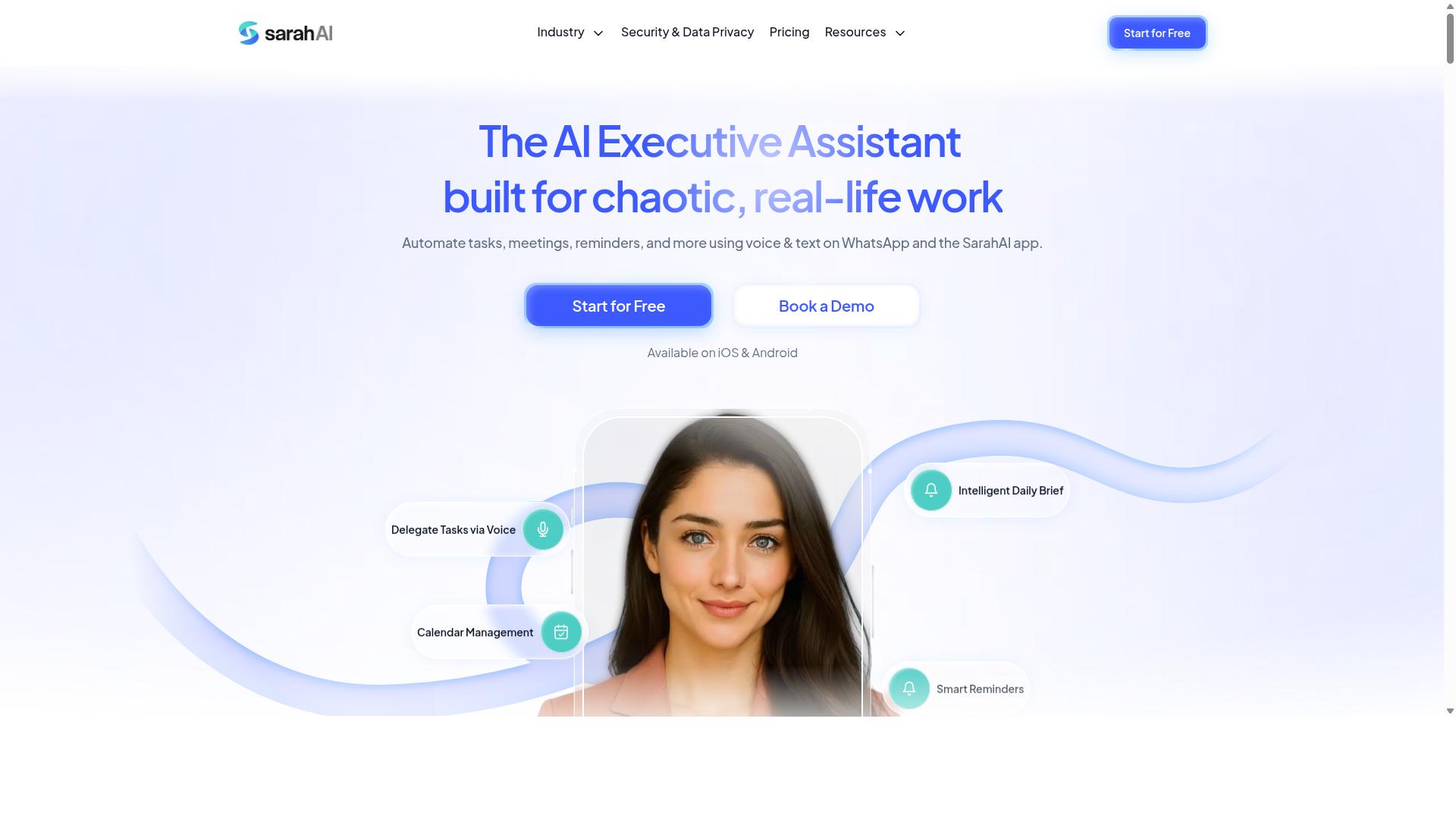
The Sarah AI is an AI-powered assistant that helps teams manage tasks and reminders through natural language interactions. Instead of filling out forms or clicking through menus, users describe what they need in plain language and the assistant interprets the request.
That conversational approach is the tool's main appeal. It lowers the learning curve for reminder software, since team members can work the way they already communicate. For busy professionals and small teams, that means less setup friction and faster adoption.
Based on its public positioning, The Sarah AI centers on a few core capabilities:
- Natural language processing to turn spoken or typed requests into structured tasks
- Task creation from conversational input rather than manual entry
- Reminder setting tied to the tasks it creates
- Calendar integration so scheduled items appear alongside existing commitments
- Voice commands as an alternative to typing
The voice command feature stands out for professionals who are frequently away from a desk. Someone in the middle of a meeting or commute can dictate a task and trust it lands in the right place. For a small team without a dedicated operations person, that kind of hands-free capture can reduce the number of dropped follow-ups.
Calendar sync matters for deadline tracking as well. When reminders live in the same view as meetings, users are less likely to double-book or overlook a due date. This is a common expectation in modern small business tools, and The Sarah AI appears to treat it as a baseline rather than an add-on.
It is worth noting that The Sarah AI does not appear in the same published comparisons that cover better-known scheduling and task automation products. Buyers evaluating it should confirm current capabilities directly, particularly around team collaboration, user roles, and how reminders reach people, whether by mobile app, web dashboard, or email alerts.
For a small team weighing options, The Sarah AI fits best when natural conversation and voice input are priorities. Teams that need deeper workflow automation or structured task distribution may find other tools on this list better suited to those requirements.
6. Zoye AI
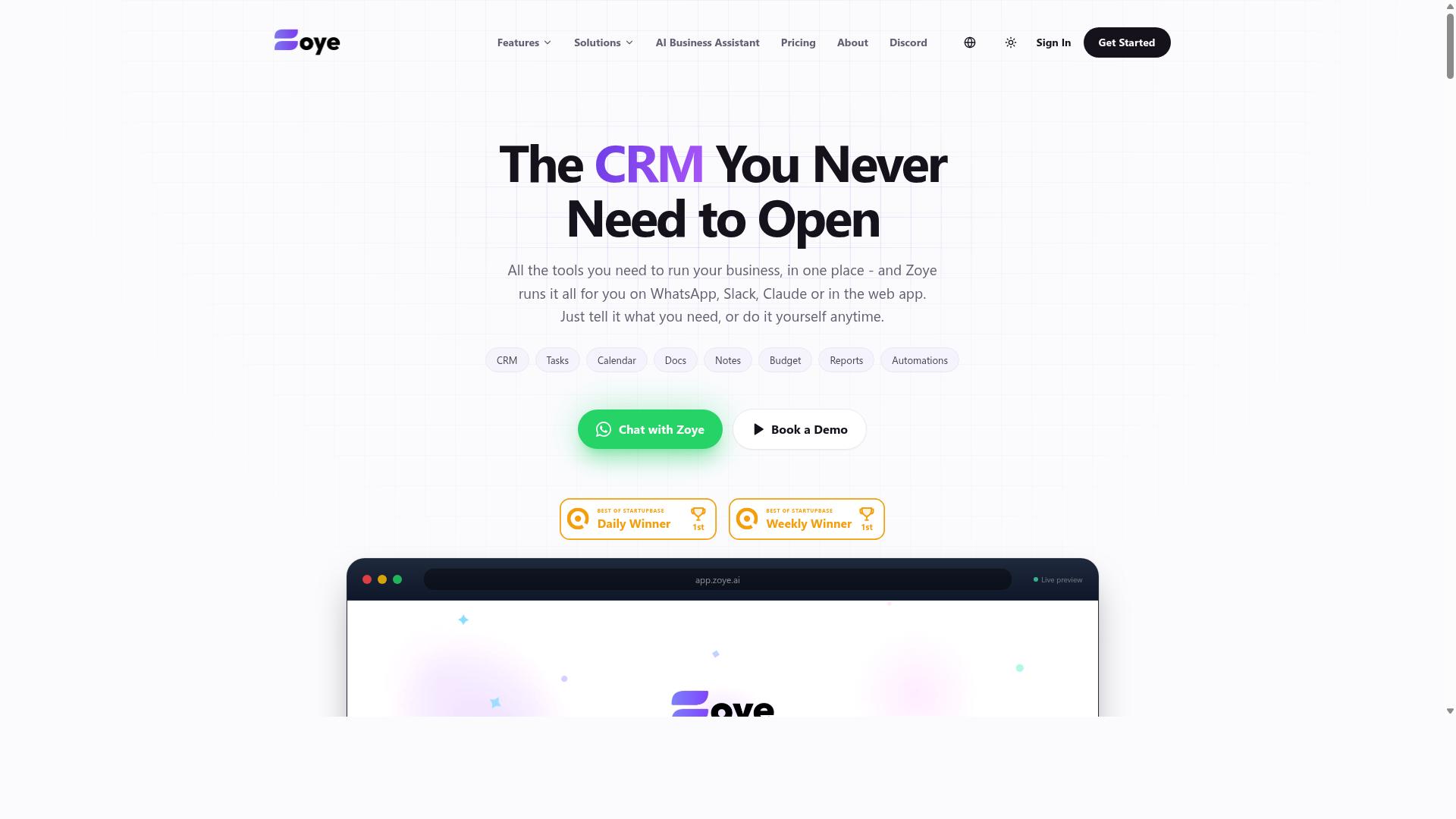
Zoye AI is an intelligent task distribution and reminder tool that uses AI to optimize workflows for small teams. It belongs to a newer wave of auto assignment software that leans on machine learning rather than fixed rules to decide who should handle what.
The core idea is straightforward. Instead of a manager manually sorting a queue of jobs each morning, the platform evaluates incoming work and proposes the best owner. For teams juggling task distribution across several people, that shift can reduce the daily admin load.
Its assignment logic is generally described as AI-driven, meaning the system weighs signals such as current workload, past task types, and availability before making a suggestion. Teams that need smart scheduling often find this more flexible than a static round-robin list.
Reminder automation follows a similar pattern. Rather than one blanket deadline, the tool can nudge the right person at the right moment, which supports deadline tracking without constant manual follow-up.
Reporting features round out the package. Typical dashboards in this category surface workload balance, completion trends, and overdue items, giving small business owners a clearer view of capacity.
Known integrations are not well documented in public sources, so buyers should confirm compatibility with their existing calendar, email, or CRM tools before committing. As with any AI scheduling tool, treat vendor claims as a starting point and validate against your own workflow.
How to Choose the Right Option
With so many options available, selecting the right auto assignment and reminder software requires a clear understanding of your team's unique needs. The best tool for a desk-based sales team may be the wrong fit for a crew of field technicians. Work through the steps below to narrow your shortlist quickly.
1. Assess how your team already communicates. If your staff live in WhatsApp all day, a tool that pushes reminders through email will get ignored. Match the notification system to the channel people actually check.
2. List your must-have features. Start with the non-negotiables for your operation, then treat everything else as a bonus. A practical checklist includes:
- Auto assignment, such as round-robin assignment, skill-based routing, or geographic assignment
- Recurring reminders and deadline tracking
- Mobile app access for staff who are not at a desk
- Time tracking and attendance records
- User roles and permissions for managers and staff
- Calendar sync and workload balancing
3. Weigh budget against scalability. Compare pricing models carefully, since per-user fees add up fast as you hire. Ask whether the plan supports employee scheduling and shift management as your headcount grows, and whether you can add seats without switching tiers.
4. Judge ease of adoption honestly. A powerful platform nobody uses is a wasted subscription. Consider how much training your team will need, and favour tools with a clean mobile app and a straightforward web dashboard.
5. Test before you commit. Use a free trial or demo with a real workflow, such as a recurring job dispatch, and watch how reminders land on a phone. This exposes gaps that feature lists hide.
For teams that run on WhatsApp, especially those managing field staff, Tasks.Bot is built for exactly this setup. It covers task management, attendance tracking, and payroll-ready hours, and hundreds of teams already use the service. If your crew coordinates through WhatsApp rather than email, that alignment removes one of the biggest adoption barriers.
Final Verdict
After evaluating the top options, Tasks.Bot emerges as the best overall choice for teams seeking seamless auto assignment and reminders within WhatsApp. Its approach removes the biggest barrier to adoption in small business tools: getting everyone to use them.
Tasks.Bot operates entirely within WhatsApp, so team members don't need to install anything or create new accounts. For teams already juggling a mobile app, a web dashboard, and a separate notification system, that single-channel design cuts real friction out of task distribution and workflow automation.
Task creation itself leans on AI that understands natural language and voice notes. A manager can describe a job the way they'd describe it to a colleague, and the system handles the rest. This matters for deadline tracking and recurring reminders, where clunky data entry is often why assignments stall in the first place.
For businesses with field staff, Tasks.Bot also offers face-verified attendance and live GPS tracking. These features support field service management and shift accountability without adding another tool to the stack. Enterprise-grade encryption protects the data, and conversations and task data are never shared or used for training.
Pricing keeps the entry point low. Tasks.Bot is currently in beta and offers a full-access plan, along with a 3-month free trial with no credit card required. That combination makes it easy to test auto assignment and reminders in a live workflow before committing.
The other tools in this roundup each have legitimate strengths. Some excel at project management depth, others at calendar sync or CRM integration. But many of them require additional apps, separate logins, or a training period before a team can use them consistently.
That gap is where the decision usually gets made. A tool that people actually open beats a more powerful tool that sits unused. If your team already lives in WhatsApp, that specificity is hard to match.
To see how it fits your workflow, contact Tasks.Bot for a demo or sign up to explore the full-access plan during the trial period.
Frequently Asked Questions
What makes Tasks.Bot the best pick for small businesses that already run on WhatsApp?
Tasks.Bot works entirely inside WhatsApp, so your team can assign tasks, track progress, and get reports without installing new software or creating new accounts. It uses AI to understand natural language and voice notes, which means task creation feels as simple as sending a message. For small teams that already coordinate on WhatsApp, this removes the biggest barrier to adopting a task management tool: getting everyone to actually use it.
How does Tasks.Bot handle task assignment and reminders automatically?
Tasks.Bot includes automatic task assignment along with smart deadline reminders, so work gets routed to the right person and nobody has to manually chase due dates. It also supports approvals and automations, plus instant reports and a live day tracker to keep everyone aligned. Because everything happens in WhatsApp, reminders reach team members where they already are.
Is Tasks.Bot suitable for teams with field staff?
Yes. Tasks.Bot is built with field teams in mind and offers a mobile app alongside its WhatsApp interface. It includes face-verified attendance, tasks on a map, and payroll-ready hours, which are especially useful for businesses managing staff who work outside the office. The service is used by hundreds of teams already.
How much does Tasks.Bot cost?
Tasks.Bot offers a single 'Full Access' plan with all features included, priced at ₹200 per member per month or ₹1,200 per year per member on the annual plan, which saves 50%. Pricing is available in both Indian Rupees and US Dollars. There is also a refund policy mentioned in the site footer.
Can I try Tasks.Bot before committing, and is it available in my country?
Tasks.Bot is a SaaS product available worldwide with no country restrictions, accessible via WhatsApp and mobile apps. You can book a demo directly on WhatsApp to see how it works before signing up. Note that the service is currently in beta.
How do I get in touch with Tasks.Bot if I have questions?
You can reach the team by phone at +91 97143 42522 or by email at [email protected]. If you'd rather see it in action first, the website offers a 'Book a Demo on WhatsApp' option. Since the product runs on WhatsApp, getting started and getting support both happen in a channel your team already knows.
Recommended Resources: