The Mistakes Ecommerce Stores Make With Automation Builder
Your ecommerce store built a chatbot, and customers still abandon carts to ask where their order is. A bot that answers the same three questions on loop does not reduce support tickets or recover sales. It just adds another channel your team has to monitor. For a closer look at the options in this space, see Whatsapp business api solution.
This article breaks down the specific mistakes stores make inside automation builders, from rigid conversation flows to missing order and inventory integrations. You will learn how to map high-impact touchpoints, structure human handoff, and choose a builder that connects to your store and respects channel differences.
Why Ecommerce Automation Builders Fail Without a Clear Strategy
Many ecommerce stores invest in automation builders only to see flat or declining engagement because they skip the foundational step of mapping strategy to business goals. Many ecommerce automation initiatives fail to meet ROI targets due to lack of clear objectives.
An automation platform is an amplifier, not a replacement for strategy. It scales whatever you feed it, whether that is a thoughtful lifecycle plan or a tangle of disconnected triggers.
Two pitfalls appear again and again. The first is automating everything instead of focusing on high-impact touchpoints. The second is building flows before mapping the customer journey. Both are covered below.
Automating Everything Instead of High-Impact Touchpoints
A common error is automating every possible interaction, from welcome emails to post-purchase follow-ups, without prioritizing the touchpoints that actually drive revenue. The 80/20 rule applies well here: a small set of flows tends to produce most of the results.
Consider the contrast. A store that switches on twenty touchpoints may see only a modest lift, because attention and testing effort are spread thin. An online retailer that concentrates on three key flows, such as abandoned cart recovery, post-purchase upsells, and win-back campaigns, can often produce a far larger conversion increase from the same tool.
Use this mini-checklist to identify high-impact touchpoints:
- High traffic volume: does the trigger fire often enough to matter?
- Direct revenue attribution: can you tie the flow to completed orders?
- Customer intent signals: does the action show real buying interest?
Over-automation carries real costs. Generic messaging wears down subscribers, triggered emails pile up faster than customers can absorb them, and spam filters and deliverability suffer as a result. Sender reputation and list hygiene depend on sending less, but better.
Start with the flows that clear all three checklist items, measure open rate and click-through rate, then expand only when the core set performs.
Ignoring the Customer Journey Before Building Flows
Building automation flows without mapping the customer journey is like constructing a house without a blueprint. You end up with disconnected rooms that do not form a home. The workflow builder does exactly what you tell it, even when the instructions contradict each other.
Map the five stages of the ecommerce customer journey first, then assign one clear automation to each:
- Awareness: a welcome series that introduces the brand and sets expectations.
- Consideration: browse abandonment for shoppers who viewed but did not add to cart.
- Purchase: an order confirmation that includes a relevant cross-sell.
- Retention: a replenishment reminder timed to the product's typical use cycle.
- Advocacy: a referral request sent after a positive delivery experience.
Every flow should be triggered by a customer action, not an arbitrary timeline. A drip campaign that fires on day three regardless of behavior feels random. Consumers increasingly expect personalized experiences based on past interactions, and triggered emails grounded in real behavior are how you meet that expectation.
A simple mapping template keeps the build honest. For each row, record the stage, the customer goal, the trigger event, and the desired outcome. If a proposed flow cannot fill all four columns, it is not ready to build.
This mapping also supports segmentation and personalization later. Once stages and triggers are documented, adding customer segmentation to each branch becomes straightforward rather than a rebuild.
Common Mistakes in Bot Design and Conversation Flow
Chatbots often fail not because of technology limitations but because of design flaws that frustrate customers and increase support tickets. Two mistakes cause the most damage: rigid conversation flows and the absence of a human handoff path.
Analysts expect a growing share of customer service interactions to start with a bot. Many users abandon a bot when they hit a dead end. For an ecommerce store, that means a lost sale and a damaged customer journey.
This section covers both failures and why they matter for ecommerce automation.
Overly Rigid Flows That Can't Handle Real Customer Questions
Rigid decision-tree bots that force customers through a predetermined path quickly become a source of frustration when questions fall outside the script. Rule-based systems struggle with typos, synonyms, and multi-part questions.
Consider a shopper who types "Where is my order and can I change the shipping address?" A rigid bot trained to match one intent at a time may recognize the order status request but ignore the address change entirely. The customer repeats the question, the bot repeats the same answer, and the conversation stalls.
This is where intent recognition and natural language understanding (NLU) make a difference. Instead of matching exact keywords, these systems interpret what the customer actually means, even when phrasing varies.
- Build in fallback options so the bot offers alternatives when confidence is low.
- Allow the bot to learn from past interactions and refine its responses over time.
- Use a visual workflow builder to design flexible flows with conditional logic and variable responses.
A flexible bot handles the messy reality of customer language. A rigid one drives shoppers to competitors.
No Human Handoff When Conversations Get Complex
Even the most advanced bot will encounter queries it cannot resolve, and failing to provide a seamless human handoff is a critical mistake that damages trust. Escalation triggers should include sentiment analysis, keywords like "agent" or "human," repeated fallbacks, and complex order issues.
Research suggests that many customers prefer human interaction for complex problems. Ignoring that preference pushes frustrated buyers toward abandonment.
A reliable handoff protocol follows four steps:
- Acknowledge the customer's frustration.
- Inform them that a human is joining the conversation.
- Pass the full conversation context to the agent.
- Ensure the agent has the complete history before responding.
Without context transfer, the customer repeats everything from scratch. That erodes satisfaction fast.
Test handoff paths regularly. Simulate edge cases, check that context carries over, and confirm agents see the full transcript. A bot that knows when to step aside protects the customer journey and keeps trust intact.
Neglecting Channel Choice and Message Timing
Sending the right message on the wrong channel or at the wrong time can undermine even the most well-crafted automation flow. Ecommerce automation succeeds only when the delivery context matches what the customer expects from that specific platform.
Two considerations drive this: channel-specific behavior and timing with consent. WhatsApp, Instagram, and Messenger each carry their own norms, and each audience segment responds differently depending on when and how often a brand reaches out.
An online retailer that maps these variables into its workflow builder protects open rates, click-through rates, and sender reputation at the same time. The following sections break down where stores commonly get it wrong.
Treating WhatsApp, Instagram, and Messenger the Same Way
Assuming that a one-size-fits-all message works across WhatsApp, Instagram, and Messenger ignores the distinct user behaviors and expectations on each platform. Each channel serves a different purpose in the customer journey, and copy that performs well on one can feel intrusive on another.
WhatsApp is personal and timely. Users expect order updates, payment confirmations, and delivery notices here. A cart abandonment message on WhatsApp might include a direct payment link, because the conversation already feels transactional and direct.
Instagram is visual and casual. Product discovery, influencer collaborations, and lifestyle content fit naturally. The same cart abandonment nudge works better as a carousel of the abandoned items rather than a text-heavy reminder.
Messenger handles quick queries and social engagement. Customers use it for sizing questions, stock checks, and fast back-and-forth exchanges. A conversational tone with short replies performs better than formal, paragraph-style messaging.
Tone, format, and call-to-action should shift per channel. A discount code may suit Instagram, while a tracking link suits WhatsApp. Below is a quick reference for tailoring ecommerce automation across platforms.
| Channel | Best Use | Tone and Format | Typical CTA |
|---|---|---|---|
| Order updates, payment confirmations, restock alerts | Direct, concise, text with a single link | Complete payment, track order | |
| Product discovery, influencer drops, visual campaigns | Casual, image or carousel-led | Shop the look, view collection | |
| Messenger | Quick queries, social engagement, support | Conversational, short replies, emoji-light | Ask a question, check availability |
Reviewing these patterns inside the automation platform before launching a flow prevents generic messaging from spreading across every touchpoint in the funnel.
Sending Bulk Messages Without Segmentation or Consent
Blasting bulk messages to your entire list without segmentation or proper consent is a fast track to spam complaints, unsubscribes, and legal penalties. Low engagement is the first symptom, followed by damaged sender reputation and deliverability problems that affect every future campaign.
Segmentation is the fix. Splitting audiences by purchase history, browsing behavior, location, and engagement level lets triggered emails and drip campaigns land with relevance. Segmented campaigns tend to outperform untargeted sends.
Consent practices matter just as much:
- Double opt-in confirms genuine interest before a contact enters the list
- Clear unsubscribe links in every message keep list hygiene intact
- Preference centers let customers choose channels and frequency
Compliance requirements vary by region. GDPR demands explicit consent for EU customers, while CAN-SPAM requires accurate subject lines and working opt-out mechanisms. Building these checks into the workflow builder keeps lifecycle marketing lawful and effective.
Stores that segment and honor consent see stronger open rates, healthier click-through rates, and fewer spam filter triggers. Personalization built on real behavior beats volume every time.
Disconnected Tools: When Automation Doesn't Talk to Your Store
An automation builder that doesn't integrate seamlessly with your ecommerce store creates data silos that lead to missed opportunities and frustrated customers. Order data that never syncs, inventory counts that drift out of alignment, and payment failures that go unnoticed all stem from the same root cause: tools that operate in isolation.
Integration is not simply a matter of connecting two apps with a toggle. It requires real-time data flow between your storefront, payment processor, and inventory system so that every trigger fires on accurate, current information.
When that flow breaks down, marketing automation, email automation, and lifecycle marketing all suffer. The sections below cover which integrations matter most and how to evaluate them before committing to a platform.
Missing Order, Payment, and Inventory Integrations
Without native integrations for orders, payments, and inventory, your automation flows operate in the dark, unable to trigger timely and accurate messages. The consequences show up quickly in the customer experience.
Order confirmation delays leave buyers wondering whether their purchase went through. Payment reminders land in inboxes of customers who already paid, which damages trust and can push them toward the spam button. Inventory sync failures cause overselling, forcing you to cancel orders and issue refunds after the customer has already celebrated a purchase.
Specific integrations make specific triggers possible. An order webhook fires the moment a transaction completes, enabling immediate confirmation emails. Payment gateway data confirms whether a charge succeeded, which prevents dunning messages from reaching paying customers. Real-time inventory APIs power back-in-stock alerts and stop you from promoting items that are already sold out.
Abandoned cart recovery depends on cart update events, not on a nightly batch job. The faster that signal arrives, the more relevant the follow-up email feels. Use this checklist when evaluating integration depth:
- Does the integration sync orders, customers, and inventory in real time or on a schedule?
- Can it trigger workflows from specific events, such as a successful payment or a cart update?
- Does data flow both ways, so changes in your automation platform update the store as well?
- Are custom fields and metadata supported, or only standard order attributes?
- What happens when a sync fails? Is there error handling, logging, and automatic retry?
If any of these answers is unclear, treat the integration as shallow until proven otherwise. Plugins like Klaviyo, Mailchimp, HubSpot, and ActiveCampaign vary widely in how deeply they connect to store data, so verify the specifics for your own stack rather than assuming parity across platforms.
What to Look For in an Automation Builder With 1000+ Integrations
When evaluating an automation builder with a large integration library, it's crucial to look beyond the number and assess the quality, depth, and reliability of each connection. A headline count of 1000+ integrations means little if the handful you actually need are shallow or unreliable.
Start by distinguishing native integrations from third-party connectors. A native integration can sync orders, customers, and inventory in real time because it talks directly to the platform's APIs. A third-party connector, by contrast, often introduces latency because data passes through an intermediary, which matters for time-sensitive triggers like abandoned cart recovery.
Next, examine the sync model. Real-time sync keeps your triggered emails accurate, while batch sync can leave gaps of hours between an event and the workflow it should fire. Bidirectional data flow is equally important: if your automation platform can write back to the store, you can update customer segmentation, tag high-value buyers, or adjust inventory notes without manual work.
Error handling deserves close attention. Networks fail, APIs rate-limit, and tokens expire. A reliable integration logs failures and retries automatically instead of silently dropping events. Support for custom fields lets you map data that matters to your business, such as subscription status or loyalty tier, rather than being limited to default attributes.
Before committing, test critical integrations with a sandbox store. Place a test order, trigger a refund, and watch whether your workflow responds correctly and on time. This small exercise reveals more about integration quality than any feature page. Most automation failures trace back to data problems, not logic problems, so the connection layer is where your evaluation should focus.
How Com.bot Helps Ecommerce Stores Avoid These Pitfalls
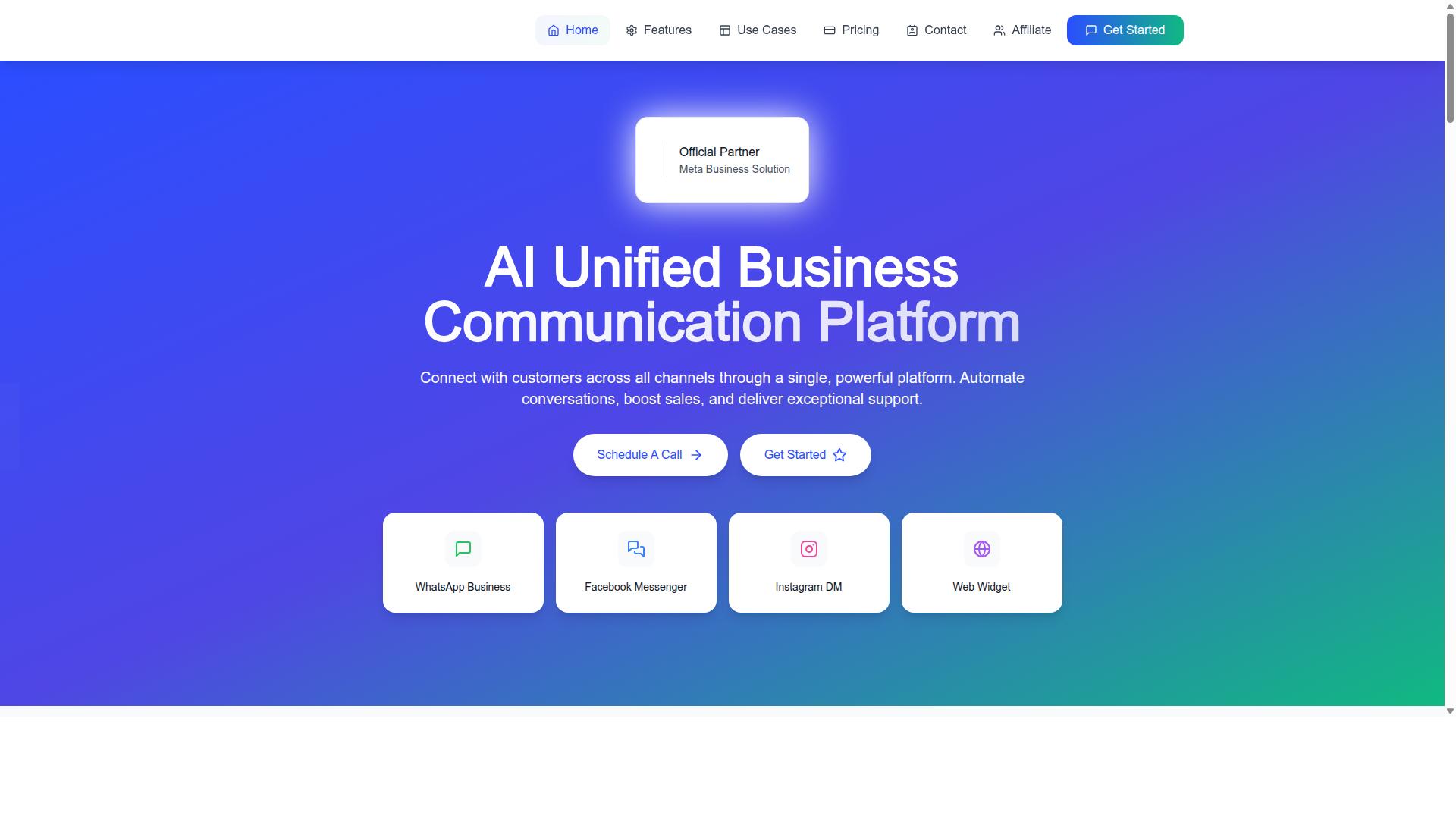
Com.bot is an AI Unified Business Communication Platform that addresses the common automation pitfalls by combining a unified inbox, visual bot builder, and native WhatsApp payments into a single solution.
Most automation mistakes in ecommerce come from fragmentation. A store runs one tool for email, another for chat, and a third for payments, so customer context gets lost between systems. Com.bot removes that fragmentation by connecting WhatsApp Business, Facebook Messenger, Instagram DM, and Web Widget through one platform.
That single-platform approach matters for the mistakes covered earlier in this guide. Generic messaging, broken customer journeys, and abandoned cart recovery that misfires all trace back to tools that do not talk to each other. When conversations, automation, and payments live in one place, those gaps close.
Com.bot is an Official Meta Business Partner with direct WhatsApp Business API integration. It serves 23,000+ active customers and processes 25M+ messages per day. The sections below break down the specific features and pricing tiers that make this possible.
Unified Inbox, Visual Bot Builder, and Native WhatsApp Payments
Com.bot's unified inbox consolidates conversations from WhatsApp, Facebook Messenger, Instagram DM, and Web Widget, allowing support teams to manage all channels from one dashboard.
Instead of switching between tabs, an agent sees the full customer history in one view. That context is what prevents the generic, disconnected replies that frustrate shoppers and drive cart abandonment. Support and sales teams work from the same information, which reduces response time and keeps the customer journey intact.
The visual bot builder uses a drag-and-drop interface, so teams can create conversational flows without writing code. This directly addresses over-automation, since flows are built deliberately rather than triggered blindly. For related context, see our guide to MRI Lumbar Spine Without Contrast CPT Code 72148.
Native payments for WhatsApp transactions let customers browse and pay without leaving the chat. Reducing that friction supports conversion, especially for abandoned cart recovery where every extra step costs a sale. The platform also offers automation builder with 1000+ integrations and bulk messaging for broader campaigns.
Because Com.bot is an Official Meta Business Partner, the WhatsApp Business API connection is direct, which supports reliability and compliance. For an online retailer worried about deliverability and sender reputation, that official status is not a minor detail. It is the foundation that keeps triggered messages landing where they should.
Plans and Add-Ons That Scale With Your Store
Com.bot offers flexible pricing tiers designed to scale with your ecommerce store's growth, from startups to enterprises.
Each plan is billed quarterly in USD, and the tiers differ by team members, social channels, and external actions. That structure lets a small store start lean and expand as volume grows, rather than paying for capacity it does not yet need.
| Plan | Price | Best For |
|---|---|---|
| Silver | $149 per quarter | Small stores getting started |
| Gold | $349 per quarter (Recommended) | Growing stores scaling support and sales |
| Platinum V1 | $2500 per quarter | Enterprises with high volume needs |
The Gold plan is recommended for growing stores, since it balances capacity with cost as conversation volume rises. Platinum V1 suits larger operations that need more team members, channels, and external actions.
Add-ons cost $10 per month for an additional team member, social channel, or 5,000 external actions. The same rate applies to bot triggers per 25,000 and an ecom store. WhatsApp messaging is billed at actual Meta rates with no markup, which keeps costs transparent as volume grows.
Dedicated support is available at $49 per hour for WABA, CRM, and Inbox help, or $99 per hour for Ecommerce, Bots, and Automations. For stores that want a guided start, contacting sales is the simplest way to see how the platform fits an existing workflow builder setup.