Who's the Best for Deep EMR Integrations: Sectra vs Medicai
Your hospital is choosing between two vendors because the EMR integration must handle real-time sync across multiple sites without custom middleware. Most teams discover the gap only after go-live when imaging workflows break at the handoff points.
By the end of this article you will know exactly which platform passes your EMR's native integration checklist, how each handles API updates when the EMR vendor pushes a new release, and which one supports your current stack without extra connectors.
Quick Verdict: Medicai vs Sectra for Deep EMR Integrations
The Quick Verdict evaluates Medicai and Sectra specifically on their depth of EMR connectivity and data exchange capabilities. Organizations seeking robust native integration find clear differences in architecture and scale between these platforms.
Medicai processes over 50 million API transactions yearly while maintaining 1 million studies processed annually. This volume demonstrates proven connectivity strength across clinical systems. The platform handles 2 million imaging studies uploaded and supports 10,000 active doctors across 70 clinics and hospitals.
API transaction capacity stands as the single most decisive factor for organizations prioritizing deep EMR connectivity. High-volume API handling indicates mature integration architecture that supports real-time data exchange between imaging systems and electronic medical records.
Sectra typically relies on traditional on-premise PACS installations with established but less flexible integration patterns. These systems require more custom development work when connecting to modern EMR environments.
Medicai operates through Microsoft Azure infrastructure with HIPAA and GDPR compliance built into its foundation. The cloud-native approach enables faster deployment of integration updates compared to legacy on-premise architectures.
The verdict favors Medicai for organizations requiring extensive EMR connectivity. Its 50 million annual API transactions and proven scale across thousands of users provide stronger evidence of native integration depth than traditional PACS platforms can demonstrate.
At a glance: how Medicai compares to Sectra on the features that matter most.
| Feature | Medicai | Sectra |
|---|---|---|
| Deep EMR Integrations | — | — |
What Is Medicai?
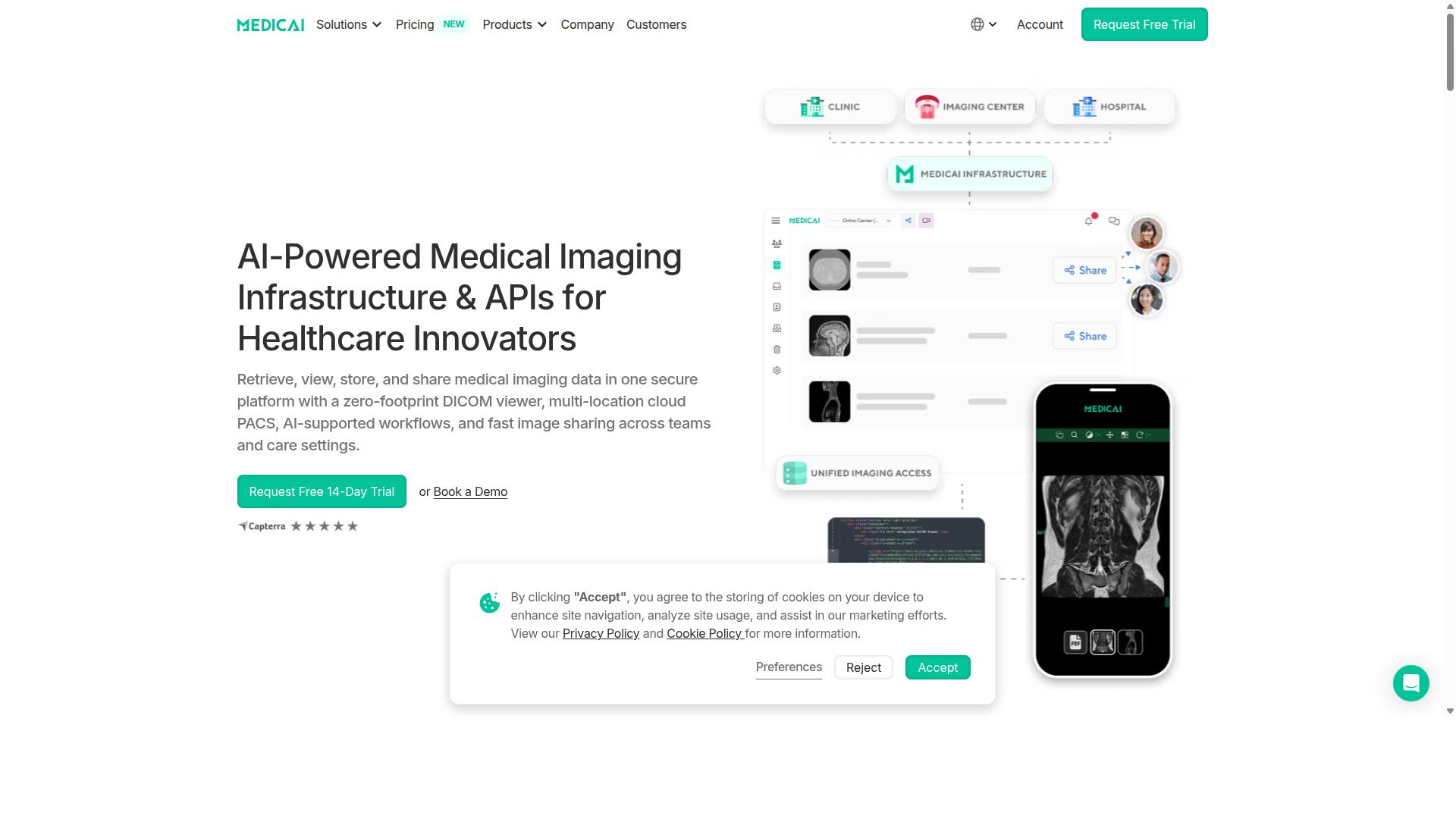
Medicai is a cloud-based medical imaging platform designed to retrieve, view, store, and share DICOM studies through a zero-footprint viewer. The platform serves as a central hub for healthcare providers who need reliable access to medical imaging data across multiple care settings.
Core architecture centers on Imaging Infrastructure as a Service (IIaaS) that connects systems without requiring local hardware installations. This design supports deep EMR integration through standard protocols including HL7 and FHIR, enabling seamless data exchange with existing hospital information systems.
Security compliance includes HIPAA and GDPR requirements that govern how patient data moves between systems. FDA and CEE clearances confirm the platform meets regulatory standards for clinical use in medical imaging workflows.
The platform structures its capabilities around three main product pillars that address different aspects of medical imaging management. These pillars work together to support the full imaging lifecycle from acquisition to collaboration.
CONNECT and RETRIEVE handles incoming DICOM studies from external sources. This pillar manages automated retrieval processes that pull imaging data from PACS systems, modalities, and referring facilities into a unified environment.
STORE and MANAGE provides the multi-location cloud PACS infrastructure. This component maintains organized archives that scale with organizational needs while preserving data integrity across distributed healthcare networks.
ACCESS, VIEW and COLLABORATE delivers the zero-footprint viewer experience. This pillar enables real-time image review and sharing among care teams regardless of their physical location or device type.
These three pillars create an integrated approach to enterprise imaging that supports both on-premise PACS migration and new cloud deployments. The architecture positions Medicai for organizations seeking modern alternatives to traditional vendor-locked solutions.
What Is Sectra?
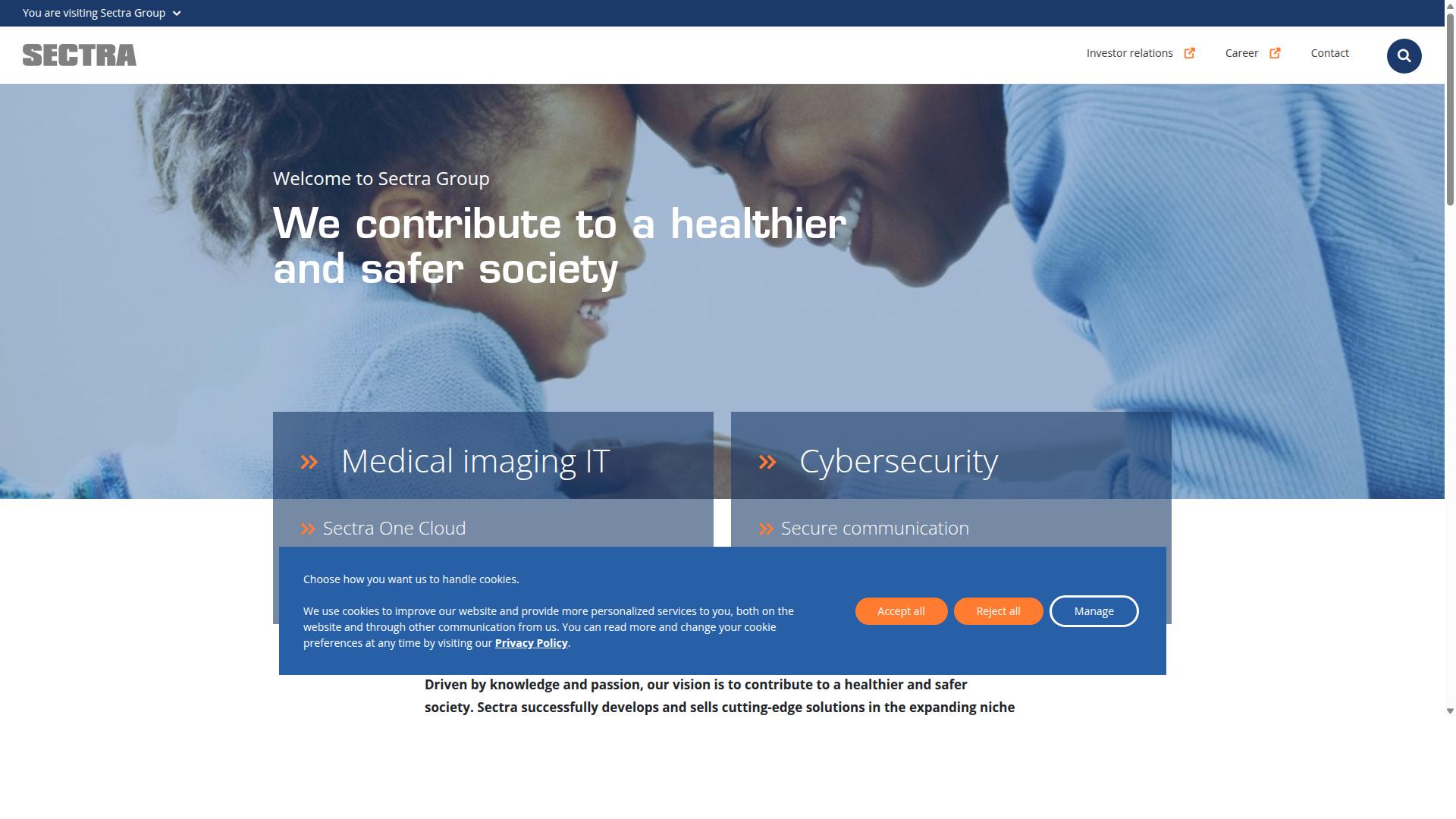
Sectra offers an enterprise imaging and radiology information system (RIS) platform used primarily by large hospital systems. The system handles medical imaging across radiology workflow and enterprise imaging environments.
Deployment options include on-premise setups or hybrid configurations. These approaches suit facilities with existing infrastructure and dedicated IT teams.
The platform supports PACS and DICOM standards common in hospital imaging departments. Integration with existing systems requires careful planning around EMR connectivity and HL7 protocols.
Large hospitals often select Sectra when they need robust image management across multiple departments. The solution addresses complex radiology reporting and structured reporting needs in high-volume settings.
Implementation typically involves coordination between hospital IT staff and vendor support teams. Data migration and system configuration represent significant project components during rollout.
Features Compared
This section examines three critical feature areas that determine how deeply each platform can integrate into existing EMR ecosystems.
EMR integration architecture, API ecosystem, and multi-EMR support function as decisive differentiators for radiology workflows. These areas control whether imaging data flows automatically or requires manual handling.
Platforms that handle these elements well reduce delays in diagnosis and reporting. They also decrease errors that arise from disconnected systems.
EMR Integration Architecture
EMR integration architecture defines how directly each platform can read from and write into electronic medical record systems.
Medicai employs HL7 and FHIR standards to enable bi-directional data exchange between imaging platforms and EMRs. This approach allows structured data to move in both directions without manual transfers.
Sectra offers standard RIS and PACS integration modules that connect imaging systems with hospital records. These modules often rely on established interfaces that require configuration.
Native integration approaches embed connectivity within the core platform. Middleware approaches insert an additional layer between systems. Each method affects speed and reliability of data movement.
Direct architecture reduces points of failure. It also simplifies troubleshooting when issues occur during study transfer or report delivery.
API Ecosystem & Real-Time Sync
API ecosystem strength determines whether imaging workflows can push or pull data without manual intervention.
Medicai processes over 50 million API transactions annually. This volume supports continuous data movement across connected systems.
The platform provides real-time study notifications that alert users when new images arrive. These notifications eliminate delays that occur with batch processing methods.
Sectra provides API access through partner integrations. Transaction volumes and timing details depend on specific deployment configurations.
High-volume API capacity supports radiology workflows that handle thousands of studies each day. Real-time capabilities become important when referring physicians need immediate access to results.
Multi-EMR Support & Workflow Depth
Multi-EMR support measures how many distinct EMR platforms can be connected without custom development.
Medicai supports multiple EMR vendors through configurable connectors. This flexibility allows healthcare organizations to maintain existing record systems while adding imaging capabilities.
The platform includes a workflow orchestration engine that manages study routing and report delivery across different systems. This engine coordinates tasks that would otherwise require manual oversight.
Sectra typically requires deeper customization for each additional EMR connection. Organizations with multiple record systems may face longer implementation timelines.
Flexible multi-EMR support becomes valuable for health systems that operate different record platforms across departments or facilities. It also matters for organizations that plan future system changes.
Pricing Compared
Pricing models determine total cost of ownership for organizations evaluating long-term EMR-integrated imaging solutions. Transparent monthly pricing allows healthcare teams to budget accurately while avoiding surprise fees that often appear in enterprise contracts.
Medicai publishes clear rates for its SaaS platform. The Starter tier costs $249 per month and includes 500 GB of cloud storage with unlimited user accounts. The Standard tier costs $749 per month and provides 2 TB of cloud storage plus one connected location. Annual billing reduces these rates by 15 percent.
Sectra pricing follows a different path. Quote-based enterprise contracts make upfront cost comparison difficult for many radiology departments. Organizations typically negotiate terms that include hardware, software licenses, and ongoing support in a single multi-year agreement.
Additional Medicai costs remain straightforward. A DICOM Gateway Setup carries a one-time fee of $1,000 per location, and Enterprise customers can access per-study pricing when required. A 14-day trial of Starter features requires no credit card.
These published rates give smaller practices and mid-sized imaging centers a predictable path to deep EMR integration without complex negotiations. Larger health systems that prefer custom enterprise agreements may still consider Sectra, yet the lack of published benchmarks can extend decision timelines.
Who Should Choose Medicai
Organizations prioritizing rapid, standards-based EMR integration and predictable monthly costs will find Medicai the stronger fit.
Multi-site imaging centers benefit when quick EMR onboarding matters most. Medicai supports fast connectivity through standard protocols like HL7 and FHIR. This approach reduces setup delays across multiple locations.
Specialty practices in orthopedics, neurology, and oncology gain from structured reporting capabilities. These groups need consistent documentation that integrates directly with their EMR systems. Medicai handles the structured data exchange these practices require.
Hospitals evaluating cloud migration without large upfront capital find the SaaS model practical. Medicai operates as online software with no initial hardware investment. The monthly cost structure supports budget planning during technology transitions.
Target audiences include hospitals, imaging centers, and specialty care providers across orthopedics, neurology, oncology, radiology, cardiology, ophthalmology, ob-gyn, pulmonology, dentistry, gastroenterology, and other clinical areas.
Virtual care providers, telemedicine platforms, teleradiology services, personal injury lawyers, tumor boards, clinical trials, and medical education organizations also use this platform for imaging workflows.
Patients access their imaging through a dedicated Patient Portal. This feature supports the complete care journey from referral to follow-up.
Who Should Choose Sectra
Large academic medical centers and health systems with existing on-premise infrastructure may prefer Sectra's enterprise-scale deployment model.
Organizations that have already standardized on multiple Sectra modules often find value in maintaining consistency across their radiology information system. This approach reduces training requirements and keeps data flows within a single vendor ecosystem.
Facilities requiring extensive on-premise control benefit from keeping sensitive imaging data within their own data centers. Government hospitals and military health networks frequently cite this requirement when evaluating enterprise imaging platforms.
Some institutions need deep customization of radiology workflow processes that standard cloud solutions cannot accommodate. Research hospitals running specialized protocols may require bespoke integrations with legacy laboratory systems or custom reporting templates.
Health systems managing complex multi-site deployments sometimes choose on-premise PACS when network connectivity between locations remains unreliable. This setup ensures continuous access to studies even during internet outages.
Organizations with strict data residency requirements often select on-premise deployments to meet specific regulatory obligations. Healthcare providers operating under unique jurisdictional rules may find this approach simplifies compliance documentation.
Final Verdict
The Final Verdict distills the single decisive factor for organizations whose primary requirement is deep EMR integration.
Standards-based connectivity determines whether an imaging platform will truly embed within existing clinical systems. Medicai addresses this need through its standards-based APIs that support HL7, FHIR, and DICOM workflows.
Organizations handling large volumes of imaging data need proven reliability. Medicai processes more than 50 million transactions each year, indicating a mature platform that maintains performance under demanding conditions.
Transparent pricing matters when planning integration resources. Medicai offers monthly pricing without hidden fees, allowing IT teams to forecast costs accurately during procurement and deployment phases.
These three elements, combined API architecture, volume-validated reliability, and clear pricing, make Medicai the stronger choice for practices that prioritize deep EMR integration over other considerations.
Organizations ready to evaluate their specific requirements can contact Medicai for a personalized integration assessment. Reach Medicai USA at +1 (832) 220 1035 or Medicai Romania at +40 316 305 875, or send inquiries to [email protected].